Culture(18 OCTOBER)
What the Looters Took
On 17 October, half a million people marched in France against the cost of living. That evening, shops from Céline on the avenue Montaigne to a Célio at Porte Saint Denis were stripped. What was taken, how it was passed around, and why clothes sit at the centre of the anger.
- Published
- Read
- 5 min
- Nº
- 16
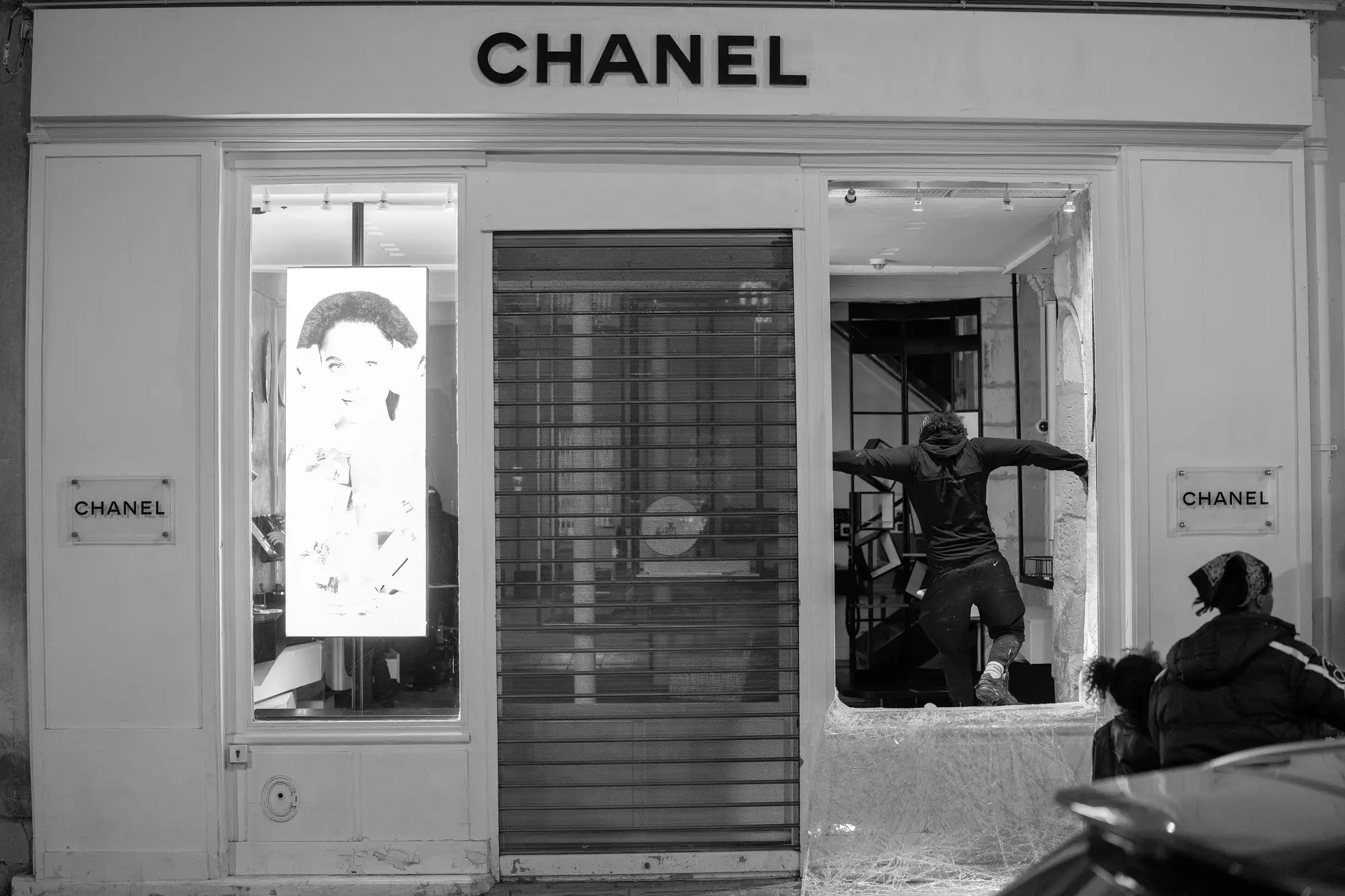
Saturday began as a march. By night, parts of Paris looked like a stockroom turned inside out: shutters ripped open, rails emptied, boxes carried down the street under streetlights.
This story is about that second part, and about why so much of it came down to clothes.
The march
The day of action was known by its date, 17 octobre. It grew out of a month of high school protests over missing teachers, crowded classrooms and run down buildings, and it was joined by students, unions and the Yellow Vests. The main grievance was the cost of living: fuel and groceries, pushed up this year by the war in the Middle East.
The interior ministry counted 550,000 marchers across France, 110,000 of them in Paris. The CGT union said nearly 800,000. Most of the marching was peaceful. In Paris, the only authorised march gathered at Place de la République, where the statue of Marianne was wearing a fluorescent vest.
The night
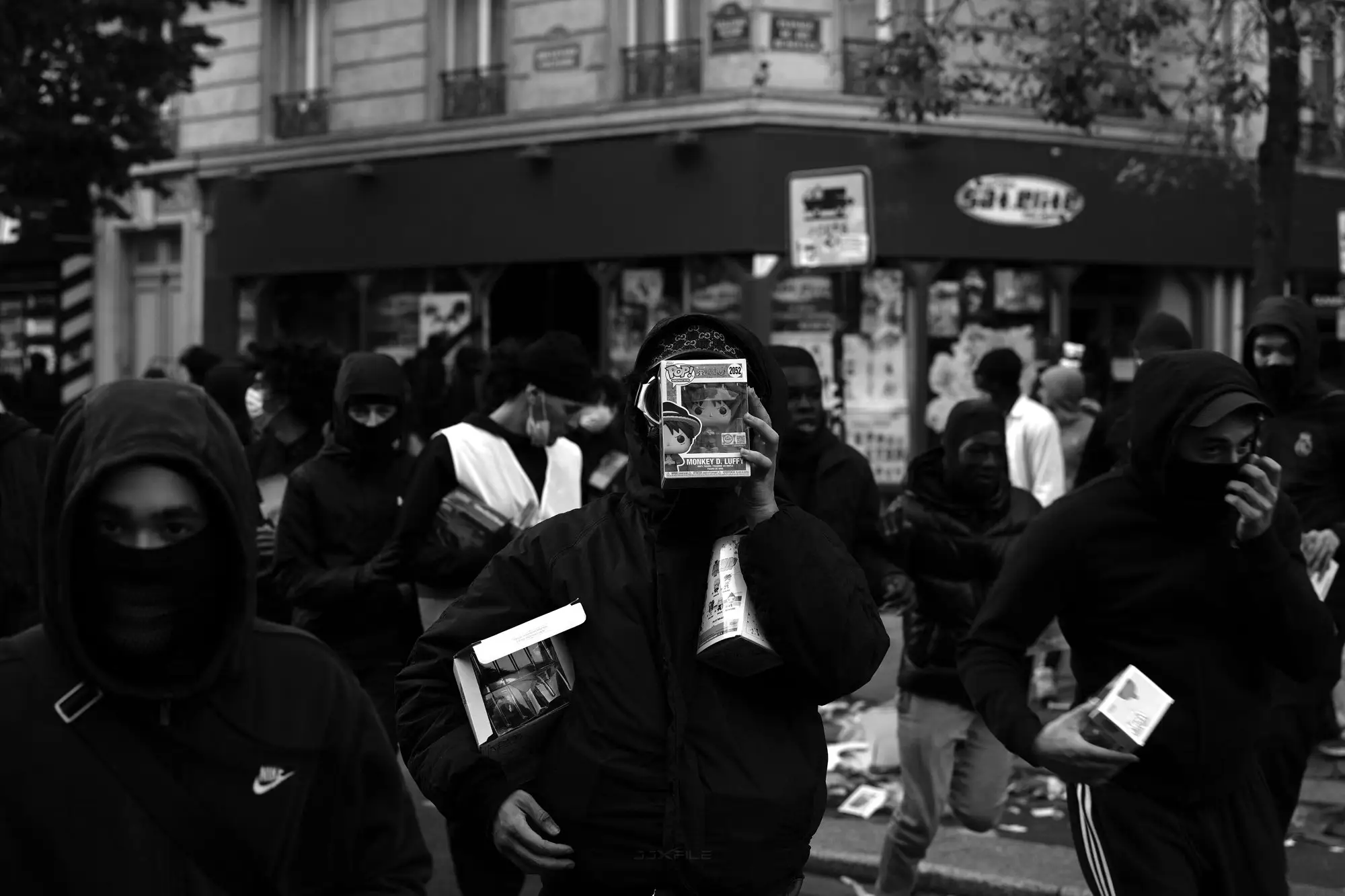
Then it turned. Around République, Strasbourg Saint Denis, boulevard Magenta, the boulevard des Capucines, Les Halles and the Madeleine, groups of young people, most of them masked and dressed in black, broke into shops. AFP reporters saw small groups work in an organised way: masks and gloves on, security cameras unplugged, then the window.
The mayor of Paris, Emmanuel Grégoire, said whole streets had been “methodically ravaged”. The prime minister spoke of violence of “extreme intensity”. By Sunday the BBC reported about 1,800 arrests and more than 500 police officers, gendarmes and firefighters injured.
What was taken
Phones, perfume, food and alcohol went first. But fashion was everywhere in the list.
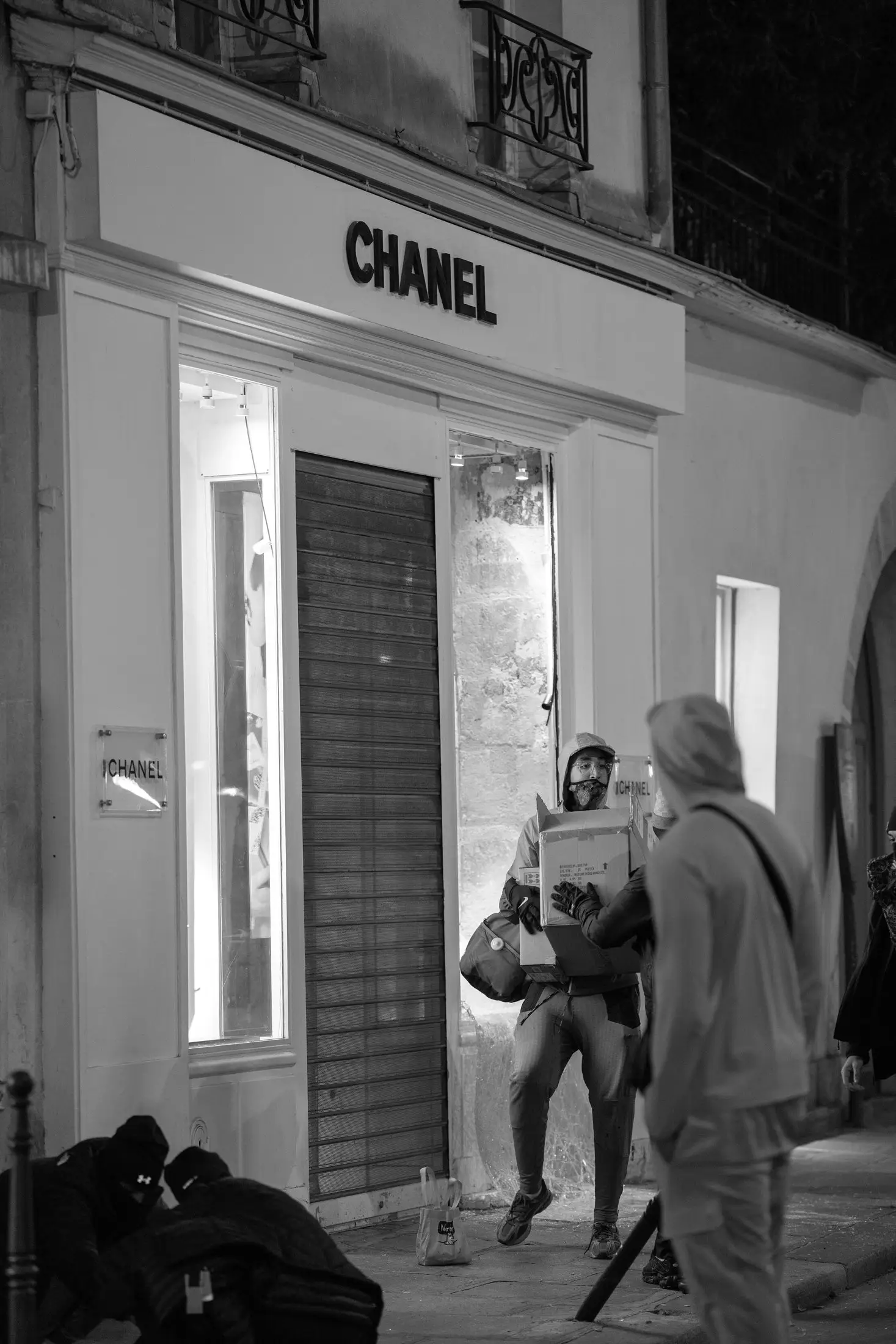
On the avenue Montaigne, where shops had not boarded up their windows the way the Champs Élysées had, the Céline boutique was looted at the end of the day. A Dior boutique was broken into in the evening. Masked people forced a metal shutter at the Galeries Lafayette. In the Marais, a photographer caught a crowd breaking into a Chanel boutique at night.
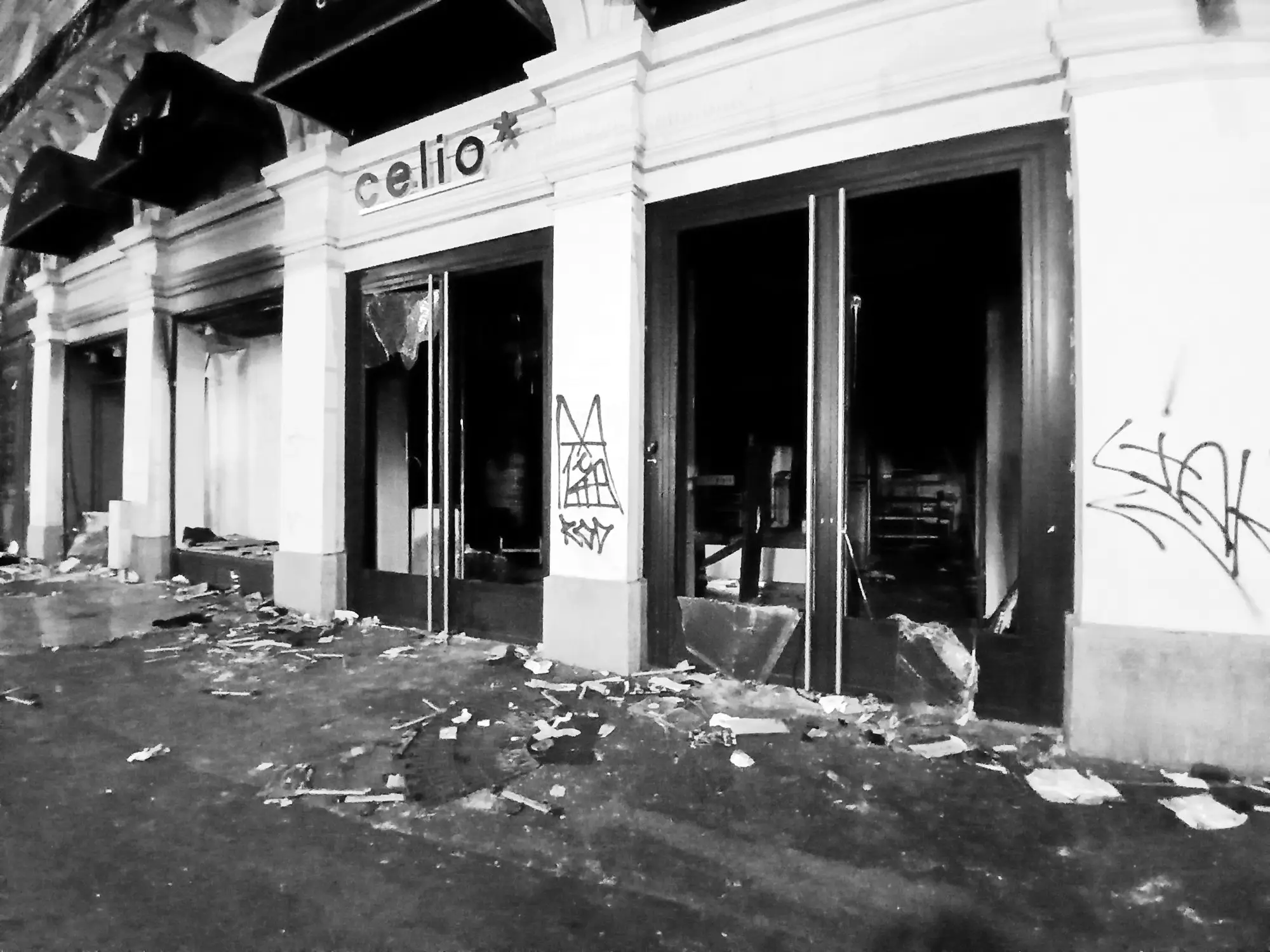
It was not only luxury. A big sports store on République was emptied. Lacoste’s chief executive, Thierry Guibert, wrote that Lacoste and Aigle stores had been looted, and that it was “jobs, years of work” that were broken along with the glass. At Porte Saint Denis, a Célio was left with nothing but rubble in the window. On Sunday morning, the BBC found the smashed frontages of Ralph Lauren, Gucci and Versace. In Marseille, Hermès was among the shops targeted.
Passed hand to hand
What stands out in the accounts is how much of the loot changed hands on the spot.
At a phone shop near République, the people inside threw handsets out to friends waiting on the pavement. At a skincare shop, beauty products were tossed to dozens of people outside. In the 11th arrondissement, AFP reporters noted that most of the looters were young men, while a few young women watched and picked up clothes “here and there”. One group walked into a hotel lobby and handed the receptionist a bottle of wine they had just taken.
In Marseille, a widely shared clip on X showed people chatting and laughing between two looted shops, and, in the words of the account that posted it, swapping their finds.
The words on the shutters
The graffiti told its own story. “Tax the rich” and “Eat the rich” were sprayed across shopfronts. On a looted Monoprix, someone wrote “C’est pour les lycéens”, this is for the high school students. On the shutter of a looted Franprix: “Vive le ruissellement”. Long live trickle down.
That last one is a joke about economics. The idea that wealth at the top eventually flows down to everyone else has been argued over in France for years. Here it was turned into a slogan for helping yourself.
Why clothes
Here is our read of why fashion sits so close to the centre of nights like this one.
A logo is money you can wear. A phone and a jacket are the two things everyone sees on you in the street. They say who you are before you open your mouth. That is exactly why brands spend so much making their names visible, and it is why those names get targeted when anger spills over.
Luxury is also, more than ever, a picture of inequality. Bain and Altagamma’s latest study shows the market shrinking at the bottom and concentrating at the top.
- 2022 400M
- 2025 340M
Luxury consumers worldwide, in millions · Source: Bain and Altagamma, 2025
So the people walking past the avenue Montaigne are increasingly people who no longer buy there. Bain says “aspirational” shoppers have pulled back as prices climbed. The window still shows them the dream. It just stopped selling it to them.
A second life
There is another reason logos travel. Fashion now has a huge afterlife. ThredUp’s 2025 report expects the global secondhand clothing market to reach $367 billion by 2029, growing about 10% a year. A recognisable name keeps its value long after it leaves the shop.
The same pull shows up in fakes. In the EU’s 2022 youth survey, 37% of people aged 15 to 24 said they had knowingly bought a counterfeit in the past year. Clothes and accessories were the most common fake, at 17%. When the name matters more than the object, the name is what people reach for.
Who gets blamed
Every side reached for its own explanation within hours.
What gets lost in that argument are the people who pay first. Near République, the Good Vibes bakery lost its whole glass front. At the Nicolas wine shop, every bottle was stolen or smashed. A shopkeeper named Cédric, who barricaded himself inside after 30 years on the same street, told RTL radio: “They’ve destroyed my business.” Big houses can board up and restock. A corner shop often cannot.
We have seen this before
- 2005 The banlieues Three weeks of urban riots across France after two teenagers died in a Paris suburb.
- 2011 London Riots spread from Tottenham across English cities. Shops were looted and burned.
- 2018 to 2019 Yellow Vests Saturday after Saturday on the Champs Élysées. On 16 March 2019, shops on the avenue were ransacked.
- 2023 After Nahel The Senate counts over 1,000 shops vandalised or looted, about 200 of them clothing shops.
- 2026 17 octobre Around 1,500 shops damaged, from Céline to the corner bakery.
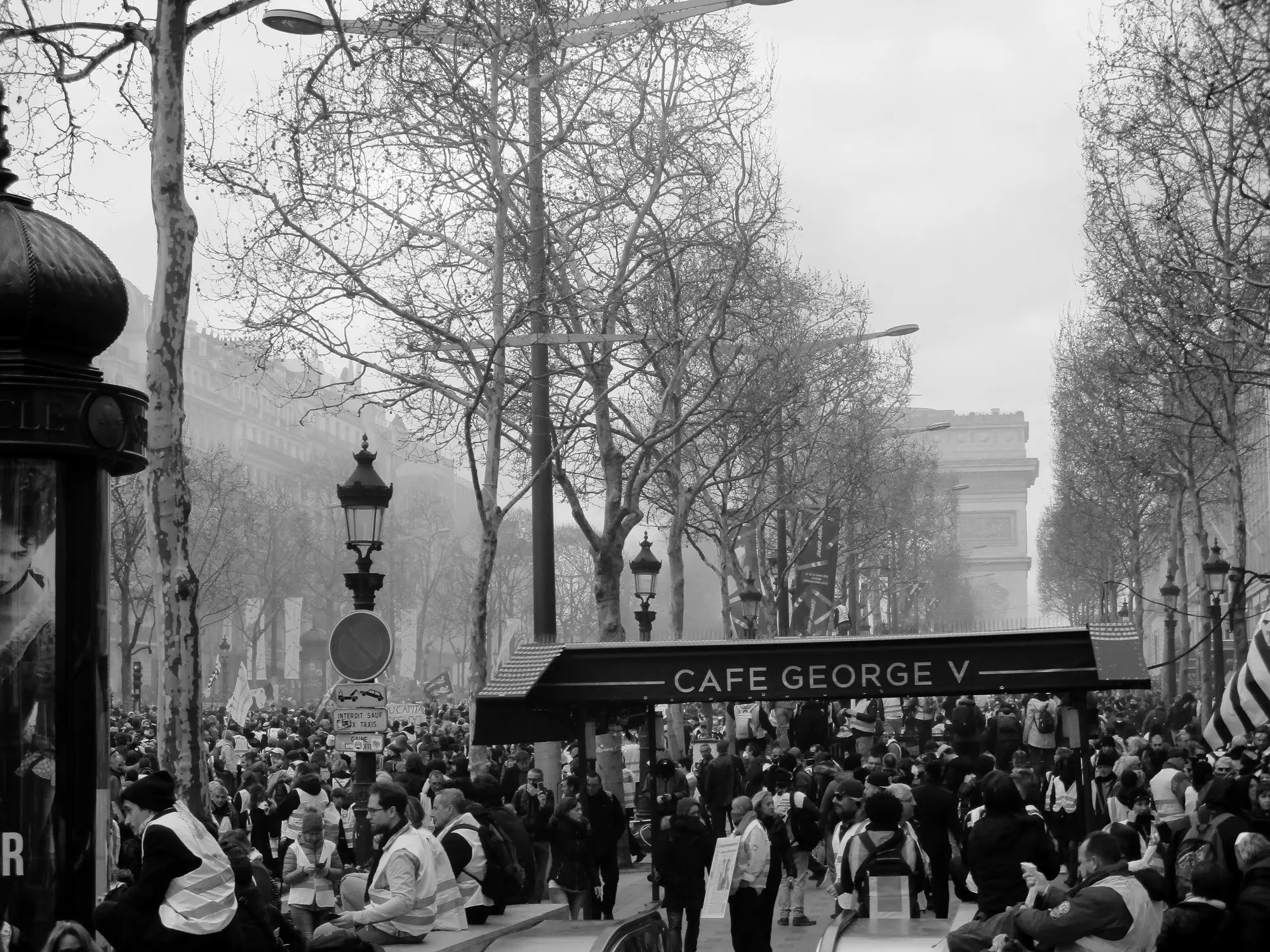 Paris, 2019 Yellow Vests on the Champs Élysées, 16 March 2019, before the shops were hit. Photo: Thomon, CC BY-SA 4.0 (shown in black and white)
 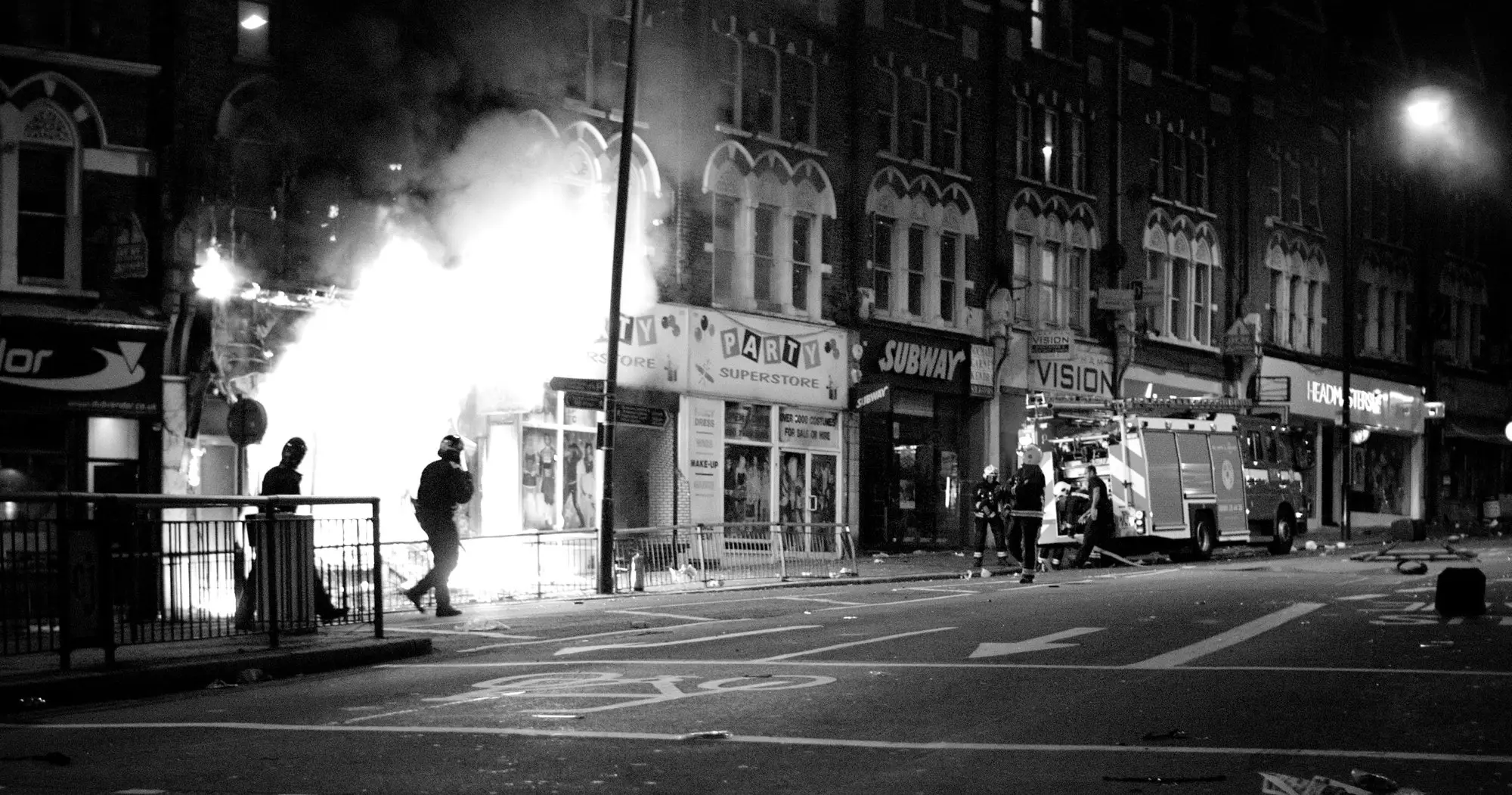 London, 2011 A shop on fire at Clapham Junction, 8 August 2011. Photo: Andy Armstrong, CC BY-SA 2.0
 The pattern repeats. A protest begins with a clear demand. Then, at its edges, the anger finds the most visible things in the city, and in a modern city those are brand names behind glass.
Why fashion matters now
It would be easy to say fashion is irrelevant on a night like this. The opposite is true. Clothes were how people told each other who they were all day long.
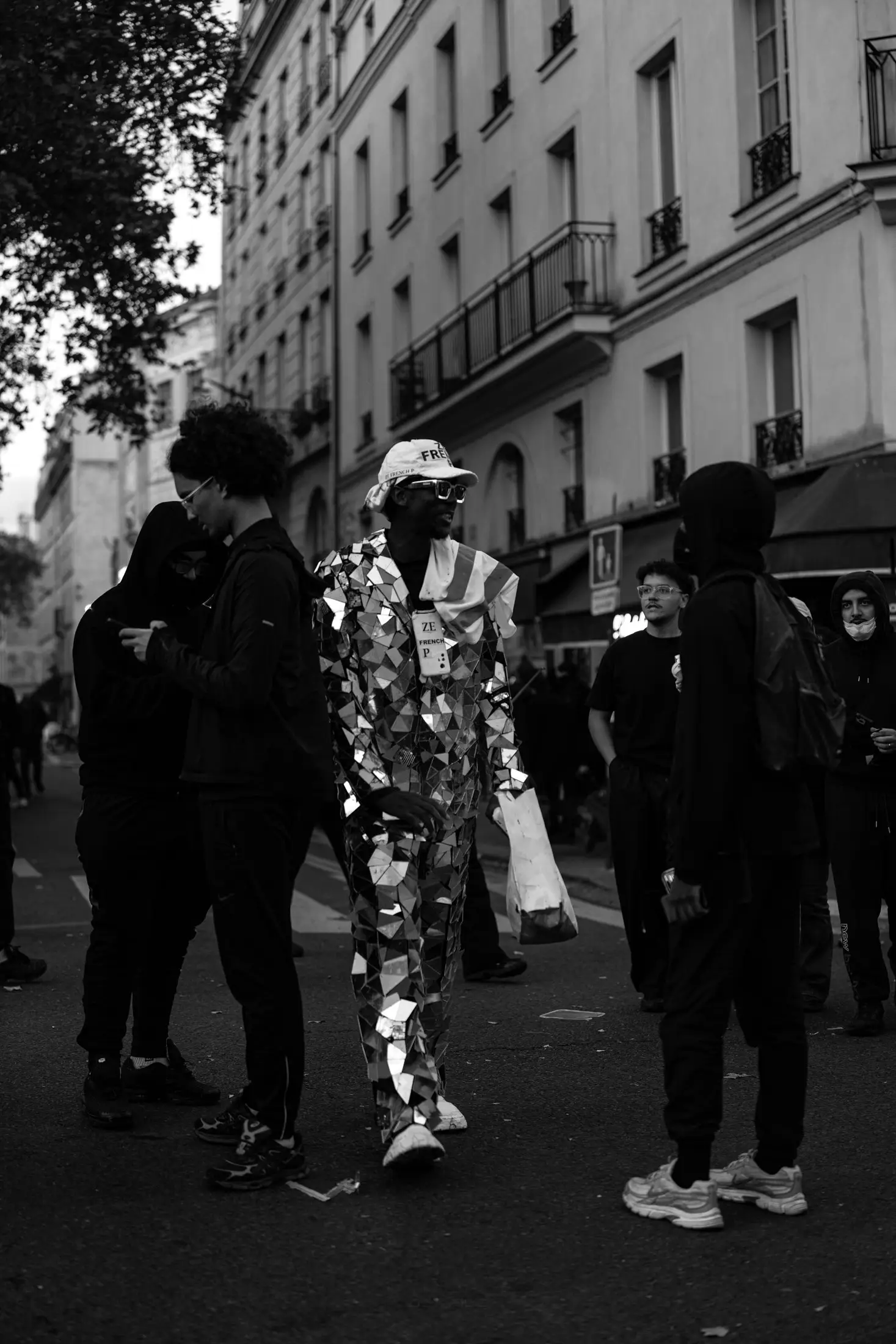
The Yellow Vest is a uniform borrowed from a car safety kit. The black clothes, masks and gloves of the groups who broke windows are a uniform too, built to make every face the same. Even the statue of Marianne at République was wearing a fluorescent vest. One marcher came in a suit of mirrors. Everyone dressed for a side.
And the shop window is where those sides meet. It shows, at full price and full light, the life a part of the country can no longer afford. In a cost of living crisis, that is not a neutral display. Nothing about that excuses breaking the glass, or the fear of the people who worked behind it. But it does explain why the glass is where the night kept going.
Your turn: when you see a famous logo in a shop window right now, does it still look like something to want, or like a sign of how far apart people have drifted?
Free with The Letter · PDF
The Detail Glossary.
50 terms to read clothes by, from bias cut to bartack. One plain line on what each one is, one line on where to spot it. Join The Letter and the download is yours straight away. Then one email every other Sunday: three details, five minutes.
Your address is used only to send The Letter. It is stored by our host, Netlify, and never sold or shared. Reply "stop" to any edition and you are off the list. What an edition looks like.